This page is general information, not legal advice. Shared driveways are governed by the deeds, easements and agreements for the properties involved, and those differ from one pair of lots to the next. For a dispute, talk to an Alaska attorney.
Who pays for a shared driveway?
Who pays for a shared driveway depends first on what is written down. If a recorded easement or maintenance agreement sets out the shares, that controls. If nothing is written, the common starting point is that the people who use the driveway share reasonable upkeep in proportion to their use. Neighbors usually settle it by agreement, and a written one saves trouble at the next sale.
How do I find out what the paperwork says?
Look at your deed, your title insurance policy and the subdivision plat. Easements and road maintenance agreements are recorded with the State Recorder's Office, and a title company can pull them for you. Flag lots and private access roads are common in the Anchorage area, and many have an agreement nobody has read in years.
My neighbor will not pay. Can I replace only my half?
You can usually improve the part that sits on your own land, but replacing only my half of a shared slab has practical limits. A new strip beside an old one will move differently in winter, and the joint between them becomes a ridge. You also may not block or damage the neighbor's right to use the driveway. Get advice before cutting a shared slab down the middle.
Can a contractor's trucks use a shared driveway?
Normally yes, if your easement gives access for ordinary use of your property, and construction trucks reaching your lot are generally part of that. You are still responsible for damage your contractor causes. Tell the neighbor the dates, avoid heavy trucks during spring thaw when the ground is soft, and photograph the driveway before work starts.
Who pays for snow plowing and sanding?
Plowing is upkeep, so it follows the same rule as other costs: the written agreement first, and fair shares if there is none. In Alaska this is the cost neighbors argue about most often. Put plowing, sanding and where the snow gets piled into the written agreement.
What should a written agreement between neighbors cover?
- Who may use the driveway and for what.
- How repair, replacement, plowing and sanding costs are split.
- How decisions are made and what happens if one side will not pay.
- Where snow is stored and who fixes plow damage.
- That the agreement is recorded so it binds future owners.
My neighbor's driveway is partly on my land. What now?
Get a survey first, so both of you are working from the same line. Then talk. Options include a recorded easement, a lot line adjustment or moving the driveway. Long use of someone else's land can create legal rights under Alaska law in some cases, so do not let it sit for years without advice from an attorney.
Can I pour right up to the shared line?
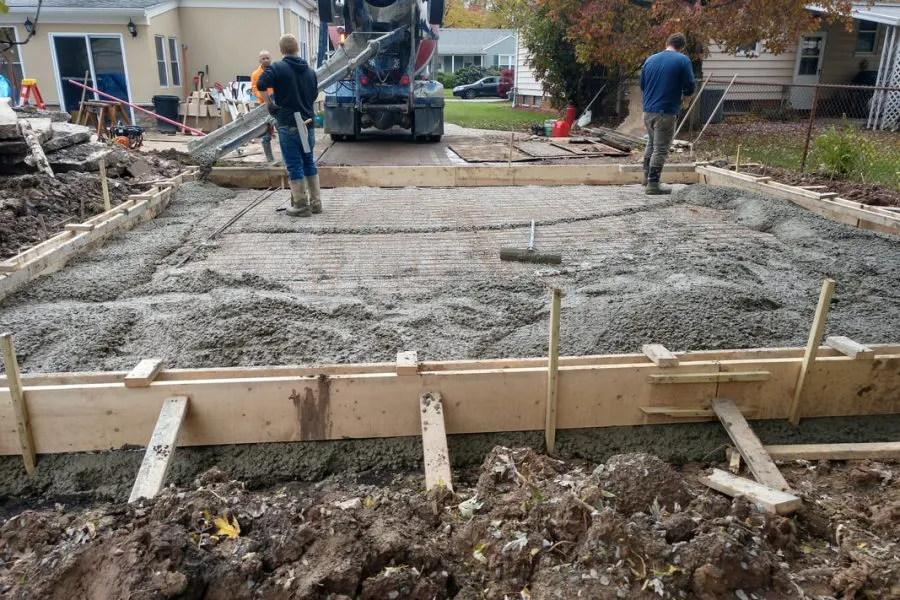
Concrete at grade can usually run up to the property line, subject to zoning and any easement. Keep your forms, your gravel and your water on your side. Leave room for your own snow, because pushing it onto the neighbor's lot is a sure way to start a dispute.
Call (907) 331-4363 if you and your neighbor want one quote split two ways. We can price each side separately on the same visit.