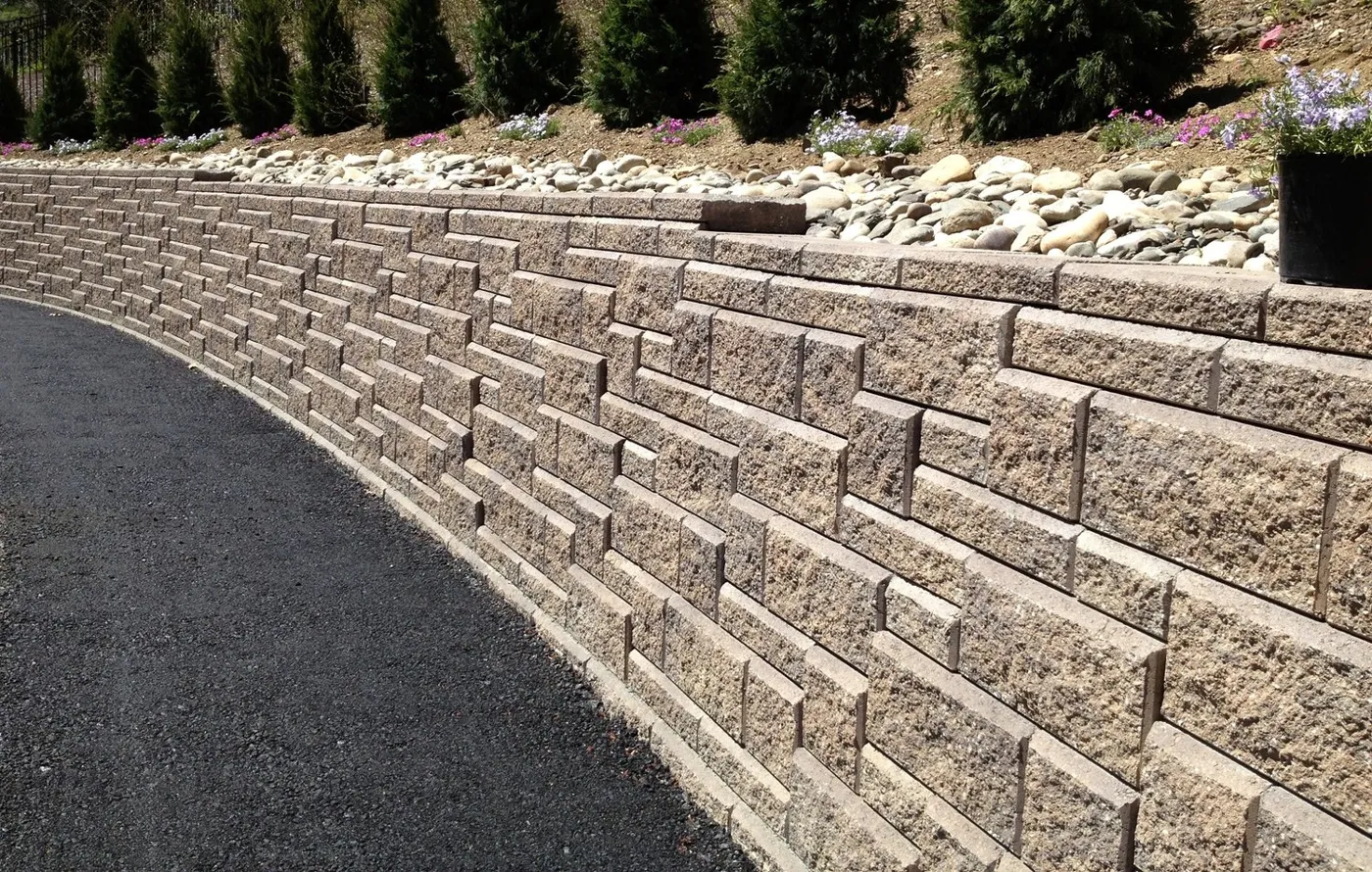
Retaining walls on Anchorage slopes have to resist frozen, wet soil and the occasional earthquake. Drainage behind the wall and the footing under it matter more than the face. The municipality exempts isolated walls that retain 4 feet or less from a building permit, and taller walls are engineered.
A retaining wall in Anchorage has to resist more than soil. Wet ground behind the wall freezes and pushes outward, a force that can tip a wall that would stand for decades in a mild climate. Then there is the chance of an earthquake. So the design has three parts that matter more than the wall face: a footing below frost or on non-frost soil, free-draining gravel behind the wall, and a drain pipe that carries water out.
Sloped lots on the Hillside, in Eagle River and along Turnagain Arm are where most walls are built, to make a flat spot for a driveway, a parking pad or a yard. We build poured concrete walls with reinforcing steel tied into the footing. For taller walls or walls that hold up a driveway or a building, an engineer designs the wall and we build to that design.
The Municipality of Anchorage lists an isolated retaining wall as exempt from a building permit when it holds back 4 feet of soil or less and its top is not more than a foot above the soil it retains. Taller walls, and stacked walls set close together, need a permit. A wall in the street right of way needs an encroachment permit, which is a separate process.
Retaining walls in Anchorage: common questions
Do I need a permit for a retaining wall in Anchorage?
Inside the Building Safety Service Area, an isolated wall that retains 4 feet or less is listed as exempt by the municipality. Taller walls need a permit and normally an engineered design. Rules differ outside the service area, so we check your address.
Why is my retaining wall leaning out at the top?
Usually water. Soil behind the wall is saturated, it freezes, and the pressure pushes the wall over a little more each winter. A wall with no drain gravel and no outlet pipe is the most likely to do this.
Can a retaining wall be built near my property line?
On your own lot, generally yes, subject to zoning. Many Anchorage lots begin well behind the curb, though, and a wall in that strip is in the right of way and needs an encroachment permit. A survey settles where the line is.
How it works
- Free estimate: Call, text or book online. We visit and measure.
- Written quote: Clear pricing with finish options.
- Prep & forms: We excavate, grade, compact the base and set forms and reinforcement.
- Pour, finish & cure: We pour, finish, cut control joints and tell you when you can use it.